
PMO hack: 38% performance boost
Here’s a stat from PMI data that should rattle a few cages:
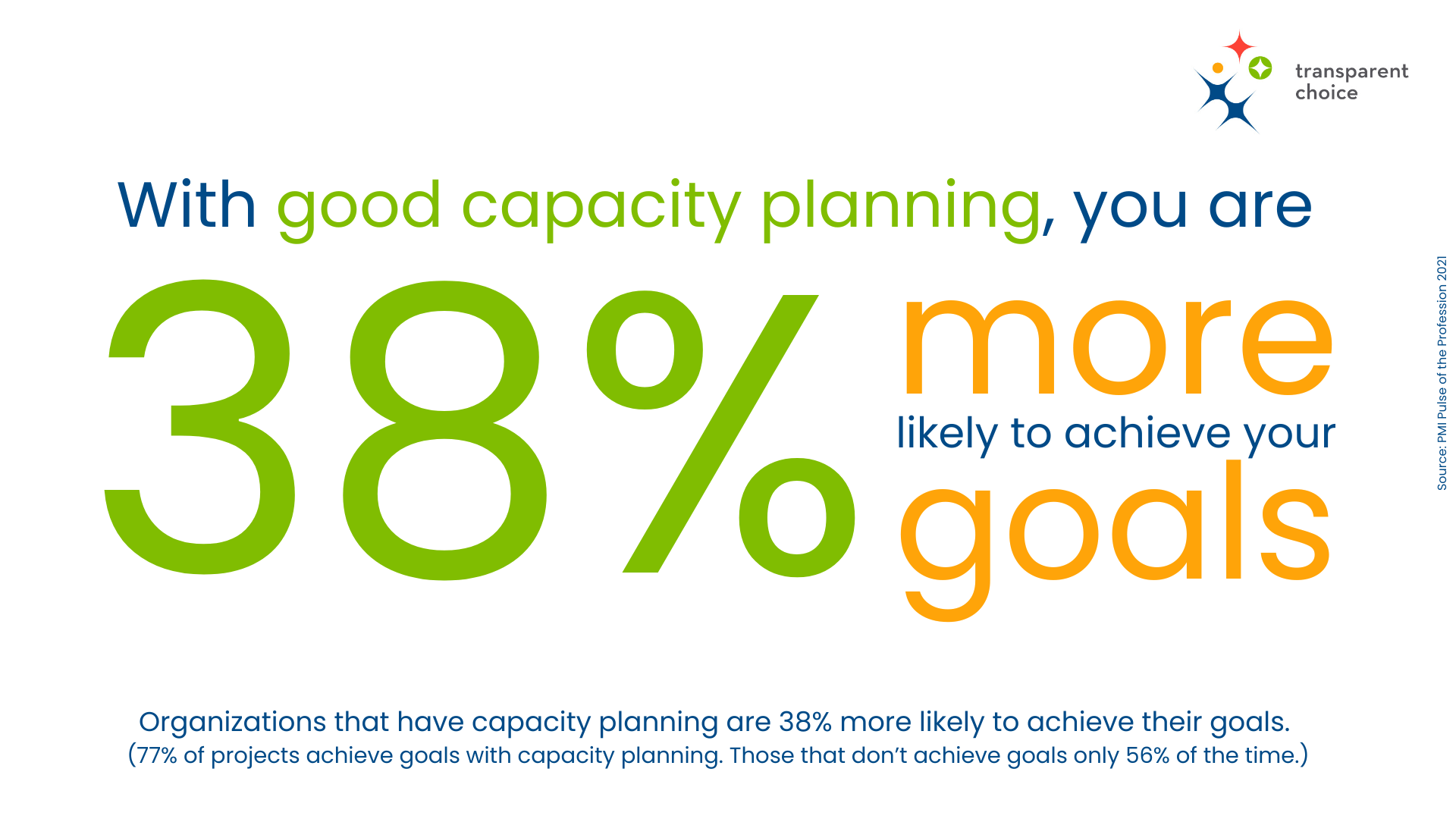
Organizations that use capacity planning are 38% more likely to hit their project goals.
That’s not a rounding error. That’s the difference between being the PMO everyone listens to… and the one they quietly blame when things go sideways.
With good capacity planning, 77% of projects achieve their goal. Without it? Just 56%.
 Look at it this way: if your car’s gas mileage (fuel consumption for the Brits!) dropped from 40 mpg to 29 mpg overnight, you’d notice.
And you’d do something about it.
Overload destroys productivity and quality
Projects don’t fail because your people are bad at their jobs. They fail because they’re overloaded. Stretched. Scrambling. Task-switching between 14 doomed initiatives before lunch.
When that happens, quality drops, delivery slows down, and morale heads for the door.
The fix? Don’t overload them in the first place. That means picking a portfolio that actually fits your capacity.
Easier said than done, right?
Planning for reality (not fantasy)
Balancing strategic priorities, budget limits, and resource constraints is like juggling flaming chainsaws on a unicycle. Blindfolded. In a wind tunnel.
Spreadsheets and traditional PPM software systems simply don’t give you the tools you need to balance business value, speed, cost and capacity.
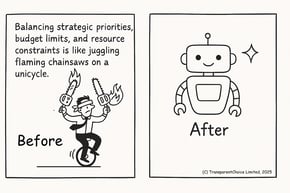 That’s why we built TransparentChoice to do the heavy lifting. Our AI ‘bot doesn’t guess. It can simulate thousands of portfolio options to find the one that gives you the best bang for your resource buck.
And it does it in seconds.
This means that you can identify bottlenecks and run multiple resource planning scenarios in minutes. Want to add a few more developers to see what effect it has? Done.
But wait, it gets worse (before it gets better)
Even if you build the perfect portfolio, you still have to schedule the damn thing. Again, traditional tools are, frankly, lacking. Working out when to start each project so you don’t get resource hot-spots takes time - a lot of time.
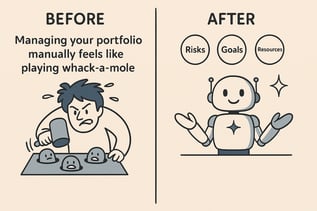 Drag. Drop. Drag. Drop. It’s like project Whack-a-mole. You fix one resource bottleneck only to create another one. I frequently talk to PMOs who take a day or more to come up with a good roadmap.
And then something changes. One project slips or another project is added and your whole plan falls apart faster than a cheap umbrella in a Scottish gale.
So we fixed that too.
TransparentChoice uses AI to simulate tens of thousands of possible schedules in seconds. When things change (and they will), you no longer need to cry into your Gantt chart. Simply press a button and, seconds later, you have a new optimized portfolio schedule.
This is how grown-up PMOs work
Look, stuff will always change. The difference is whether you panic, or just hit “recalculate.”
If you want to stop playing Portfolio Jenga and actually deliver value, you need proper capacity planning.
Because, and I’ll say this just one more time for the people in the back, organizations that use capacity planning are 38% more likely to achieve their goals.
But you, the PMO, already get it. You know prioritization and capacity planning are important - but often, PMOs struggle to get the executives to play.
If that’s you, start with a Decision Review. We’ll talk through the commitments competing for funding and capacity, what’s making the choice difficult, and what leadership may need to reconsider.
👉 Start with a Decision Review
30 minutes. No preparation needed. Just a practical conversation about the decision you’re facing.