
Creating a Strategic PMO is a Zoo
About this webinar
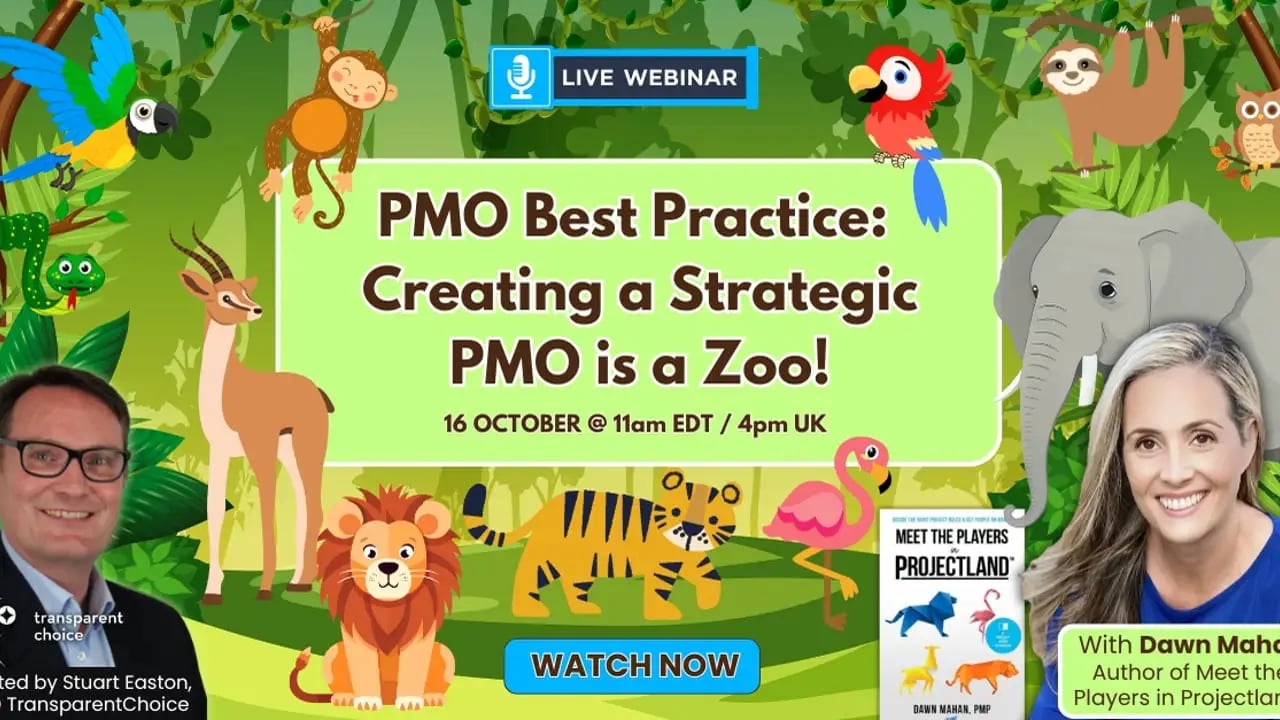
Projects run on people, and those people do not always behave the way the process says they should. Dawn Mahan joins Stuart Easton to explore the human side of creating a strategic PMO through her Projectland framework. Using memorable animal archetypes, Dawn makes difficult stakeholder behaviours easier to recognise, discuss and respond to without reducing the conversation to personalities or blame.
The animals are a starting point, not permanent labels. A sponsor may behave like a lion because of the authority and pressure that come with the role. A resistant stakeholder may look like a snake because they feel their territory is threatened. The useful question is what is driving the behaviour and what the project or PMO can do about it. Dawn develops the framework further in Meet the Players in Projectland.
What you’ll hear
- Use archetypes to make the people problem discussable. Dawn explains why Projectland uses animals such as the Tiger project manager, Lion sponsor and Snake blocker: the metaphor gives teams a practical language for talking about behaviour, motivations and stakeholder risk without making the conversation unnecessarily personal.
- Understand the power of the sponsor role. Senior leaders may not realise how strongly their reactions affect a project team. Dawn argues that sponsors need to make it safe to surface problems, respond constructively when a project turns red and use their authority to help rather than simply demand answers.
- Put accountability where decisions can actually be made. The discussion distinguishes an accountable sponsor from a committee, explores when a steering team is genuinely needed and warns against blurred ownership such as co-sponsorship when one person needs to be accountable for the decision.
- Treat project management as a leadership role. Project managers may have to lead across organisational boundaries without conventional line authority. Dawn and Stuart discuss why the organisation must reinforce that role, and why PMs also need to coach their teams to communicate effectively with senior stakeholders.
- Diagnose resistance before trying to overcome it. Stakeholders may support the project, oppose it or sit somewhere in between. Rather than assuming every resistant person is simply difficult, Dawn recommends understanding their perspective, what they believe they are protecting and whether the project manager can address it or the sponsor needs to step in.
- Build PMO credibility through relationships and visible value. Drawing on her own PMO leadership experience, Dawn describes checking in with sponsors and department leaders, gathering stakeholder intelligence and making the value delivered by the PMO visible while working within the culture it is trying to change. For the wider question of how to design or evolve that role, see the Ultimate PMO Guide.
Learn more
Join the next live webinar

Explore more webinar recordings
Continue with practical discussions on portfolio decisions, prioritisation, capacity, strategy and delivery. Explore the webinar library.
Speakers

Dawn Mahan, PMP, is an international speaker, author, award-winning consultant, and inventor of the ProjectFlo® Process Learning System. A former Fortune 50 PMO leader, she now helps organizations build strategic PMOs and accelerate project success, and she serves on the American Lung Association Philadelphia Leadership Board.

Stuart Easton is Founder & CEO of TransparentChoice. He works with leaders and portfolio teams on decisions about which investments and initiatives to fund, continue, change, defer or stop when priorities compete for limited funding and capacity. His work combines structured decision-making with practical portfolio choices.