
Make clear choices when demand exceeds capacity
When more requests compete for funding and capacity than you can support, TransparentChoice helps leadership make priorities explicit, compare competing demand consistently, test feasible choices and decide what deserves commitment, what should wait and what should not proceed.
30-minute conversation to see whether TransparentChoice fits the competing demand, priorities and capacity choices you're trying to resolve.









The Problem
Demand becomes difficult when more legitimate requests compete for funding and capacity than the organization can support. Each request may have a case, but urgency and advocacy can drive decisions before the effect on the wider portfolio is clear.
Without an explicit way to compare competing demand against current priorities and constraints, new work can be added while existing commitments remain unchallenged and the real trade-offs stay implicit.
The Solution
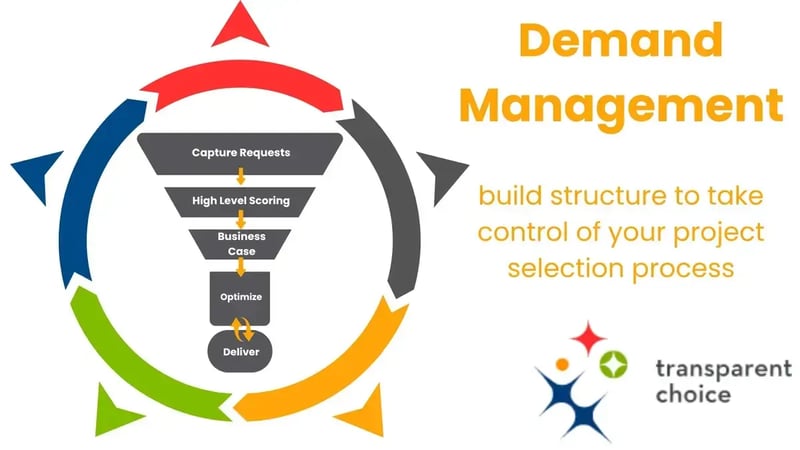
TransparentChoice gives leadership a structured way to decide between competing demand. Bring together priorities, value, risk, effort and other evidence so requests can be compared consistently.
Apply funding, capacity and other constraints across the competing requests to test realistic combinations and make the trade-offs explicit. Requests can continue to enter through the systems and processes you already use. TransparentChoice focuses the decision on what deserves commitment, what should wait and what should not proceed.
Your Results with TransparentChoice
-
✅ Compare Competing Requests
See requests side by side so leadership can compare their relative value, strategic priority and capacity needs before deciding where to commit resources.
-
✅ Connect Demand to Strategy
Make the link between each request and current priorities explicit, so lower-value work is easier to challenge before it consumes scarce capacity.
-
✅ Data-Driven Prioritization
Use AHP (Analytic Hierarchy Process) to structure and test priorities, make stakeholder judgement explicit and give leadership a consistent, transparent basis for comparing competing requests.
-
✅ Match Demand to Capacity
Test which combination of requests fits available funding and capacity, so teams are not spread across more work than they can realistically support.
-
✅ Prevent Capacity Being Allocated by Default
Make demand choices explicit before attention, urgency or advocacy decide which requests absorb scarce capacity.
-
✅ Focus Discussion on the Real Trade-Offs
Use scenario planning to compare realistic portfolio options and focus leadership discussion on the trade-offs that materially change what gets funded.
What Our Customers Say
We like to say yes to things... but not having a prioritised backlog was stressful.
How It Works with TransparentChoice
-
Make Priorities Explicit
Agree what matters before comparing requests, making leadership priorities and judgement explicit and testable.
-
Compare Competing Demand
Bring together value, risk, effort, evidence and stakeholder judgement so requests can be compared consistently on the same basis.
-
Apply Real-World Constraints
Test competing requests against funding, capacity, mandatory work and other constraints to compare feasible combinations.
-
Make the Trade-Offs Explicit
Compare feasible choices, make what each alternative gives up visible, and let leadership decide what deserves commitment, what should wait and what should not proceed.
Could this work for your demand and priorities?
Tell us what is competing for funding and capacity, how priorities are set and what leadership needs to decide. We’ll help you assess whether TransparentChoice fits.
See the full TransparentChoice software →
Need to resolve a portfolio decision now? See the Decision Sprint →
Why This Decision Matters
When Every Request Competes for Attention, Capacity Gets Allocated by Default
New requests keep arriving even when funding, people and leadership attention are already constrained.
Without explicit choices about relative priority, requests that attract the most attention can absorb capacity while other opportunities wait and existing commitments remain unchallenged.
Making those choices explicit gives leadership a clearer basis for deciding what deserves commitment now, what should wait and what should not proceed.