
Linking Strategy to Execution for PMO Excellence
About this recording
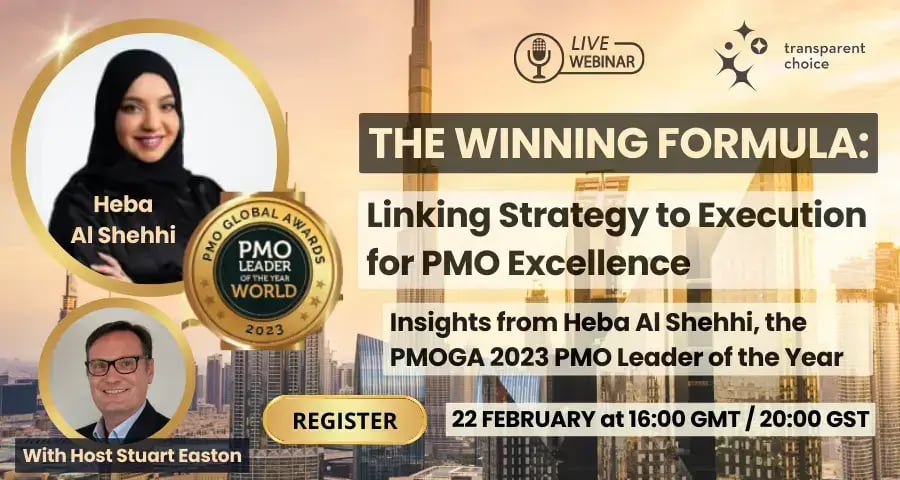
What does it take for a PMO to earn a place where organisational decisions are made? Heba Al Shehhi, an award-winning PMO leader at Dubai Municipality, joins Stuart Easton to explain how the organisation moved from departmental PMO roots to an enterprise-wide function following a change in executive leadership in 2018.
- Earning a seat at the decision table. The PMO proposed a project approval committee as part of its establishment study and secured membership in it, alongside representation on Dubai Municipality’s board of directors. Heba explains how nine prioritisation criteria, business-case checks and cross-departmental discussion helped make project approval more consistent and identify overlapping proposals.
- Turning resistance into support. Heba mapped senior stakeholders by their influence and attitude towards the PMO, then tailored her engagement with them. She describes winning over a sceptical department head by showing how the system could strengthen his own reporting and help measure project and departmental success. He later began encouraging wider use.
- Making reporting useful rather than threatening. In board meetings, the Director General would ask Heba whether projects and delays had been reported to her, reinforcing the PMO's authority across departments. Heba explains why she discussed emerging problems with responsible executives before reporting upwards, giving them the opportunity to address issues or present credible recovery plans.
- Making benefits someone’s responsibility. Heba distinguishes recording expected benefits from assigning people to realise and measure them. Her customer-happiness example shows how accountability can sit with the department responsible for the service outcome, rather than ending when a project is delivered.
Heba also discusses developing complementary PMO team skills, introducing coaching support during COVID and encouraging departments to make their project plans visible rather than develop them privately. She closes with a lesson she wishes she had learned earlier: demonstrating an idea and its results can persuade senior leaders more effectively than trying to win an argument.
Research in context
More scrutiny can produce less candour. A 2014 qualitative study of nine government IT projects in one US state, based on 118 interviews, described a cycle of distrust. In some projects, teams perceived auditors' scrutiny as unfair and responded with defensive reporting. Auditors sometimes responded with more scrutiny, reinforcing the distrust.
The finding adds context to Heba's practice of discussing emerging problems with department heads before reporting upwards. The challenge is not simply obtaining more project information, but maintaining a reporting relationship in which people are willing to surface difficult news.
How this connects to TransparentChoice
Heba describes scoring proposals against nine criteria, reviewing different budget types separately and bringing HR in early to identify the roles each project needs. When several worthwhile projects compete for the same funding or people, the next question is which combination the organisation can actually support.
TransparentChoice connects structured leadership priorities with funding, capacity and other constraints to compare feasible portfolios. Leaders can change assumptions and retest the alternatives before deciding what to commit to. See how TransparentChoice software works.
Learn more
How can you adapt your leadership style to different people and pressures?
In a separate conversation, Heba Al Shehhi explains her Air, Water, Earth and Fire leadership approach, with practical examples from audits, demanding deadlines and developing people's strengths. Watch: Elements of Leadership with Heba Al Shehhi.
How can a PMO earn executive support without a ready-made mandate?
Alexander David explains how to start with leadership's business problems, demonstrate useful improvements in 90-day cycles and sustain sponsorship. Stuart Easton adds the portfolio-level causes that can sit behind executive complaints. Watch: Winning Executive Buy-in for Your PMO.
How can sponsors encourage honest reporting when project news is bad?
Dawn Mahan's Projectland examples show how a sponsor's reaction to a red project status can encourage defensive reporting, and why asking how to help can lead to a more useful conversation. Watch: Creating a Strategic PMO Is a Zoo.
Speakers in this recording

Heba Al Shehhi is an award-winning PMO leader and author of the bestseller Elements of Leadership. Recognized as PMO Leader of the Year (2023), she also serves as Lead of the PMOGA MENA Hub with PMI–PMO Global Alliance. With over 20 years of experience, Heba specializes in PMO strategy and operations, digital transformation, enterprise architecture, and business agility.

Stuart Easton is Founder & CEO of TransparentChoice. He works with leaders and portfolio teams on decisions about which investments and initiatives to fund, continue, change, defer or stop when priorities compete for limited funding and capacity. His work combines structured decision-making with practical portfolio choices.