
Elements of Leadership
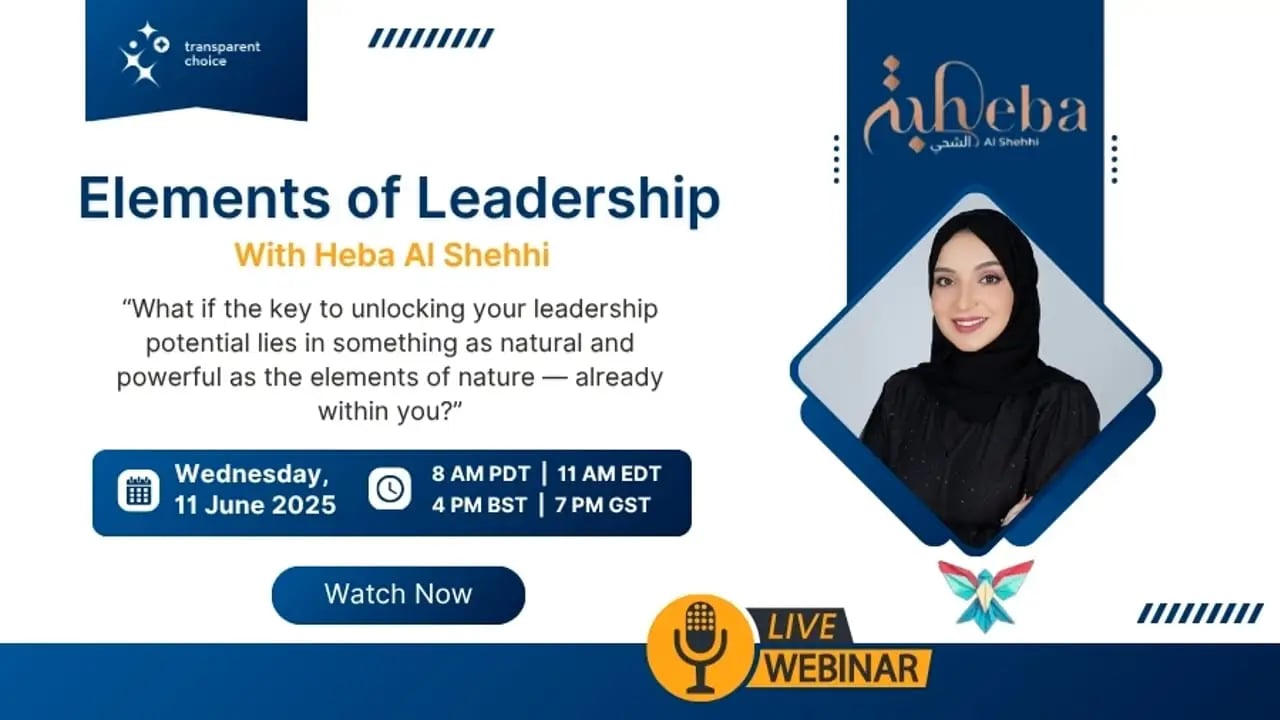
About this recording
Can you lead with kindness without losing authority? Heba Al Shehhi was once warned that being kind would make her a less effective leader. She disagrees. Kindness matters, but so do clear expectations, honest feedback and the willingness to have difficult conversations.
In this conversation, Heba draws on her book Elements of Leadership and her experience leading PMO teams. She uses four elements of nature as reminders of the behaviours a leader can draw on: Air for inspiration and communication, Water for trust and adaptability, Earth for stability through change, and Fire for passion, learning and empowerment. They are not fixed personality types. A leader can draw on several elements at once, depending on what people and the situation need.
What does that look like in practice?
- Choose the leadership response your team needs. Before an audit, Heba found members of her team anxious about the work ahead. She deliberately drew on Fire to encourage them. She recalls that the auditor subsequently praised their teamwork, clear responsibilities and ownership.
- Challenge urgency without passing pressure down. When management wants something immediately, Heba asks what really needs to be delivered and why. She explains how she negotiates a draft by the requested deadline and a more developed result later, rather than promising what her team cannot reasonably deliver.
- Recognise strengths, not just job descriptions. Heba describes a talented young engineer who was unhappy with desk-based PMO work. After understanding his interests, she helped him move towards infrastructure work better suited to his strengths. She also explains how knowing her team's individual abilities shapes the work she assigns.
- Lead upwards through evidence, not arguments. Heba prefers demonstrating capability to repeatedly confronting senior stakeholders. Stuart Easton adds an NHS practitioner example in which a PMO leader uses a whiteboard to make an overloaded plan visible to an executive, rather than simply refusing another project.
- Protect your own capacity to lead. Heba speaks personally about the health effects of sustained stress and the importance of support networks, relationships and life beyond work. Looking after yourself is part of remaining able to support other people.
In the closing discussion, Heba also explains how her PMO has adapted as the organisation changed, earning trust by providing useful oversight rather than policing.
Watch to hear how Heba handles questions about demanding managers, deadlines, team strengths and changing leadership behaviour under pressure. Her examples show how the four elements work together beyond the metaphor.
Research in context
Can a leader be highly effective without being well-liked? In a 2013 analysis of leadership ratings, Jack Zenger and Joseph Folkman examined feedback on 51,836 leaders. Just 27 were rated among the least-liked quarter and the most-effective quarter.
That challenges a related assumption behind the warning Heba received about kindness: that well-liked leaders cannot be highly effective. But likability is not the same as kindness. The figures come from 360-degree assessments, not independently measured business results, and do not prove that kindness causes leadership effectiveness.
How this connects to TransparentChoice
Stuart's whiteboard story puts Heba's advice about leading upwards into practice. As Stuart tells it, a PMO leader showed an executive the work already committed against the team's available capacity, then asked how they should proceed with another requested project.
That changed the conversation. The executive could see the constraint, but there was still a decision to make: if another project must start, what makes room for it?
This is where TransparentChoice can help. It compares combinations of projects against leadership priorities, available funding and resource capacity, showing which commitments can be supported and what may need to wait or give way. Leadership decides which commitments to change.
Learn more
How do you lead when sponsors and teams are under pressure?
Continue with Heba Al Shehhi and Dawn Mahan as they discuss difficult sponsors, working across organisational boundaries and protecting the conditions people need to do good work. It is a practical companion to Heba's four-element leadership approach. Watch: People First: Setting Projects Up for Success
How do you get executives to understand a project problem?
Heba recommends showing rather than arguing. But what information will help an executive respond? This article explains how to translate delivery problems, resource shortages and project risks into business impact, options and decisions. Read: Why Executives Don't Speak Project Language
What if the organisation has committed to more work than it can deliver?
Stuart's whiteboard example exposes the capacity problem. This article takes the next step: checking which approved projects fit the resources available, deciding when work can realistically start and adjusting the sequence rather than expecting everything to happen at once. Read: Why Execution Breaks Down Before Projects Start
Speakers in this recording

Heba Al Shehhi is an award-winning PMO leader and author of the bestseller Elements of Leadership. Recognized as PMO Leader of the Year (2023), she also serves as Lead of the PMOGA MENA Hub with PMI–PMO Global Alliance. With over 20 years of experience, Heba specializes in PMO strategy and operations, digital transformation, enterprise architecture, and business agility.

Stuart Easton is Founder & CEO of TransparentChoice. He works with leaders and portfolio teams on decisions about which investments and initiatives to fund, continue, change, defer or stop when priorities compete for limited funding and capacity. His work combines structured decision-making with practical portfolio choices.