
How to Drive Transformative Change with Portfolio Management
About this webinar
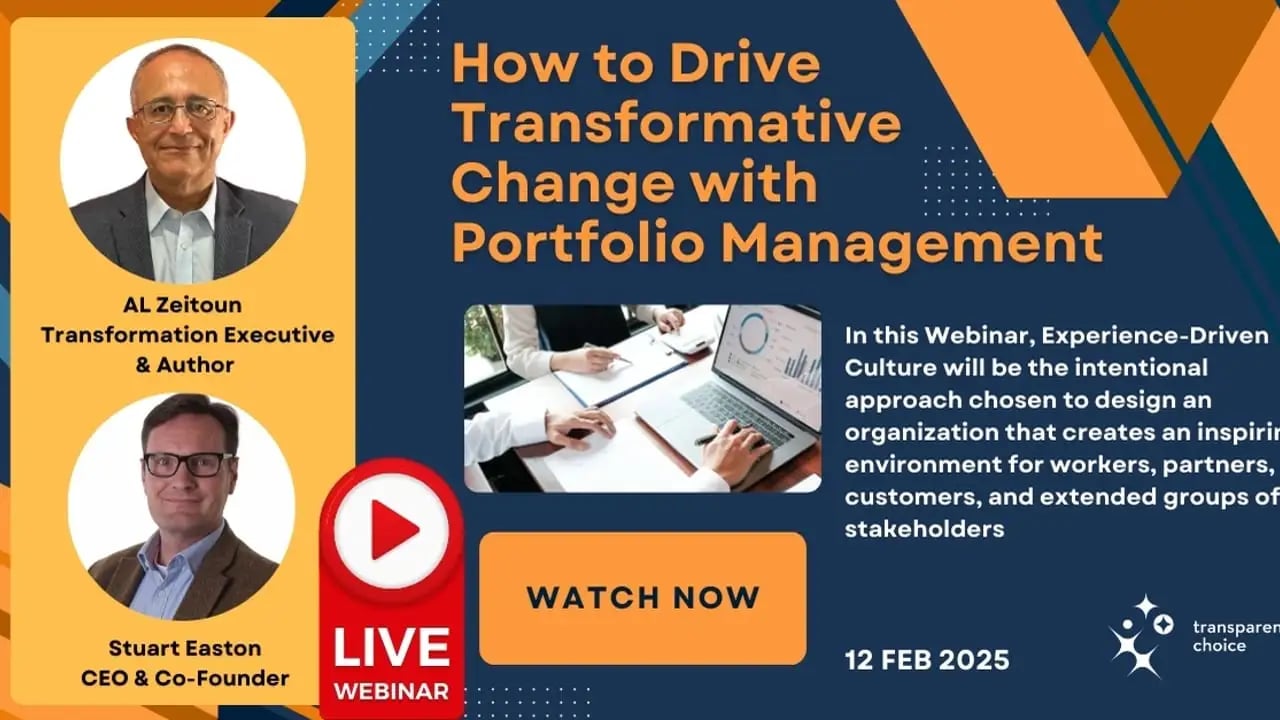
Dr Al Zeitoun and Stuart Easton explore how culture, leadership, learning and enterprise portfolio management interact when organisations are trying to turn strategy into change and keep adapting as conditions move.
What you'll hear
- Treat culture as something people can shape. Al connects strategy, culture, leadership and ways of working, arguing that practitioners can influence them through behaviour, language, education and ownership rather than treating culture as something fixed around them.
- Choose methods that fit the organisation and the change. Al treats standards, frameworks and ways of working as guides rather than prescriptions. The question is what fits the organisation, the problem and the change, not which methodology wins.
- Build a PMO that learns and changes the business. Al describes future PMOs as learning engines and change entities: their job is mainly to change the business rather than run it, with tactical and mechanical work embedded elsewhere or automated. He argues that the label matters less than a clear mission and executive authority, and places the PMO directly with the executive team.
- Start with value and the real change problem before process. Al contrasts successful transformation with one of his own failed PMO experiences, where processes and templates were put in place before the organisation had established the value it actually needed. In another consulting example, the team delivered the agreed statement of work but missed what the client really needed: less executive resistance to the change. On executive buy-in, Al distinguishes change people want from change they are forced into, warning that imposed change can arrive too late or fail to stick; Stuart adds that the case should start from leadership's problems rather than the PMO's methodology or certification.
- Connect goals to the portfolio choices behind them. Al argues for portfolio management as an enterprise muscle connecting strategy, investment, resources and value across the organisation. Stuart makes the decision gap concrete: goals such as reducing carbon footprint and improving profit do not by themselves say how resources should be allocated between them. Al adds that OKRs become meaningful in portfolio context and that prioritisation should support a wider conversation about the organisation's strategic choices.
- Keep a North Star while the route adapts. Al argues for clear direction with greater visibility in nearer planning horizons while learning and adaptation continue as conditions change. His human digital thread connects technology with trust, empathy and human leadership rather than treating digital change as purely technical.
Research in context
Transformation engagement goes beyond the executive team. Al argues that change people want and own is likelier to stick than change they are forced into. McKinsey's 2016 Global Survey adds a view of where engagement differed: 94% of respondents reporting successful transformations rated the CEO as very or somewhat visibly engaged, compared with 83% of other respondents. The difference was larger for line managers (82% versus 57%) and frontline employees (73% versus 46%). The comparison covers 1,487 respondents who had taken part in a transformation in the previous five years.
The PMO as a learning and change function. Al describes future PMOs as learning engines whose job is mainly to change the business rather than run it. In the same survey, the practices of PMO or transformation-office leaders most closely linked to reported success were identifying barriers to change and disseminating transformation knowledge and best practices.
How this connects to TransparentChoice
In the recording, Stuart argues that value is subjective: different stakeholders naturally push for the initiatives that fit their own view, creating a risk that prioritisation becomes a contest won by the loudest voice. TransparentChoice makes that decision step explicit.
- Make competing judgements explicit. Leadership priorities and initiative assessments can be structured in one decision model, giving leaders a shared basis for comparing worthwhile work before resources are committed.
- Test the choice against real constraints. Available funding, capacity and other material constraints can be represented alongside value so leadership can compare feasible portfolio choices rather than rely on priorities or rankings alone. If priorities, assumptions or constraints change, the portfolio can be recomputed to test whether the previous choice still holds.
TransparentChoice supports the analysis; leadership decides what to fund, continue, change, defer or stop. See how the software works.
Learn more
Join the next live webinar

Win executive support by starting with their problems
In Accelerating PMO Performance: A Proven Framework for Strategy IMPACT, Laura Barnard and Stuart Easton explore how a PMO can earn executive credibility by starting with business problems rather than PMO process, and by working in 90-day cycles with 30-day checkpoints.
Turn strategic goals into resource choices
Strategic Goals goes deeper on defining, cascading, measuring and weighting goals, distinguishing goals from projects and OKRs, and connecting them to resource choices.
Build strategic portfolio management into the PMO
In How to Incorporate Strategic Portfolio Management into the PMO, Deborah Yates and Stuart Easton explore the practical PMO side: strategy cascade, culture and governance, pacing the change and organising executive reporting around the decision leadership needs to make.
Speakers

Al Zeitoun is a global leader in strategy execution and programme management, with expertise in operational excellence, organisational development, and sustainable transformations. A PMI Fellow and trusted strategic advisor, he has supported Fortune 500 companies, government agencies, and global enterprises in delivering complex transformations. He is also an author, keynote speaker, and executive coach recognised for helping organisations achieve lasting impact.

Stuart Easton is Founder & CEO of TransparentChoice. He works with leaders and portfolio teams on decisions about which investments and initiatives to fund, continue, change, defer or stop when priorities compete for limited funding and capacity. His work combines structured decision-making with practical portfolio choices.